Published
7 minute read
Your face shape is more flexible than it looks.
Bone structure sets the basic framework, but your facial appearance also depends on muscle size, facial fat, skin quality, volume, and the way your features relate to one another. That means you can make meaningful changes to the shape of your face without changing the bones themselves.
At Miami Skin + Vein, I think about facial reshaping in terms of proportion. A stronger chin can make your jawline look sharper. Restoring volume to your cheeks can change how wide or narrow your face appears. Relaxing enlarged masseter muscles can soften a square lower face. Small changes in the right places can alter the overall impression without making you look like a different person.
That’s where injectable treatments can be especially useful. They let us work with your existing facial structure rather than against it.
Most people think face shape comes down to bone structure, and bone is certainly part of it. Your forehead width, cheekbones, chin, jaw, and overall facial proportions create the basic outline.
But the soft tissues sitting over that framework play a major role too. Facial fat adds volume, facial muscles influence width and definition, and skin changes can soften or blur contours over time.
That’s why someone with a naturally oval face can start to look more square if the masseter muscles become enlarged from clenching or teeth grinding. A round face may look longer after facial volume loss. A heart-shaped face may lose some of its definition as the cheeks flatten with age.
Your face shape is not a fixed geometric category; it’s the result of several layers working together.
It can, especially in the lower face.
The masseter muscles sit along the back of your jaw and help with chewing. If those muscles become enlarged, they can make your jaw look wider and squarer. This often happens in patients who clench or grind their teeth.
Botox or Dysport can be injected into the masseter muscles to reduce excessive contraction. Over time, the muscles may decrease in size, creating a slimmer lower face and a more defined jawline.
This type of treatment is sometimes called masseter reduction. It doesn’t change the jaw bone itself, but it can make a noticeable difference in the shape of your face if muscle bulk is part of the problem.
Botox can also influence other areas. A subtle brow lift can change the way the upper face reads, and carefully placed injections around the neck or jawline may improve facial contours in select patients.
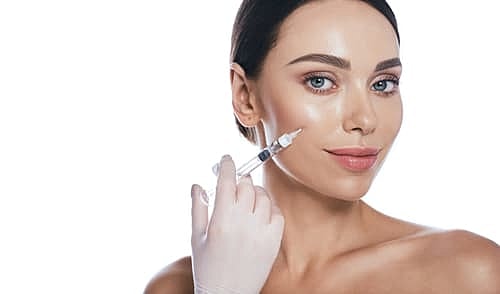
Dermal fillers are one of the most useful tools for changing facial shape without surgery because they let us add volume exactly where it’s needed.
Hyaluronic acid fillers can strengthen a small chin, sharpen the jawline, restore flattened cheeks, or improve symmetry between different parts of the face. The effect can be subtle, but proportion is powerful. Adding a few millimeters of projection to the chin can make the entire profile look more balanced.
Cheek filler can also influence facial shape. Higher, more defined cheeks may create a more sculpted appearance, while restoring volume in the midface can soften a drawn or narrow look.
I don’t think of filler as “making something bigger,” but rather making adjustments to what you already have. Where you place volume matters just as much as how much you use.
Facial fat has a major influence on your contours, but it’s not something you can spot-reduce with facial exercises.
A double chin, fuller lower face, or heavier jawline may come from fat, muscle, skin laxity, bone structure, or a combination of those things. Treatment depends on the cause.
Weight loss may slim the face overall, but where you lose fat is largely determined by genetics. Some people lose facial fat early. Others maintain fullness in the cheeks or under the chin even at a healthy weight.
This is why a treatment plan should start with anatomy. Trying to slim muscle when the issue is fat, or adding filler when the issue is already too much volume, can push the face in the wrong direction.
Facial exercises get a lot of attention online because they sound simple and free. The evidence is much less exciting.
Moving your facial muscles may improve awareness of facial posture, and massage techniques such as gua sha can temporarily reduce puffiness or improve circulation. They do not reshape your bones or selectively remove facial fat.
The same applies to tongue posture. You may have seen advice telling you to keep your lips closed, place your tongue against the roof of your mouth (also known as mewing), or chew hard foods to create a stronger jawline. Good oral posture can be helpful for function, but there is limited scientific evidence that changing where your tongue rests will dramatically alter an adult's facial structure.
Facial massage can help with water retention, especially if your salt intake is high or you eat a lot of processed foods. That can make the face look slightly less puffy, but the effect is temporary.
Healthy lifestyle habits absolutely support your overall appearance, but they can’t rewrite your anatomy.
Yes, although the change is gradual.
Your facial bones remodel throughout adulthood. Over time, certain areas lose density and projection, including parts of the jaw, chin, and eye socket. At the same time, facial fat shifts and skin becomes thinner.
That combination can make the face look longer, flatter, or less defined with age.
Dermal fillers can sometimes recreate some of the support that has been lost. Strategic placement around the cheeks, chin, jawline, or temples can restore facial contours without altering the bones themselves.
This is one reason injectable treatments have become increasingly popular. They allow us to work with age-related changes while keeping the result flexible and relatively low commitment.
Cosmetic surgery can create more dramatic and permanent changes because surgical procedures can alter bone, fat, and soft tissue directly.
Procedures such as chin augmentation, facial implants, jaw surgery, buccal fat removal, neck liposuction, or other forms of plastic surgery may be appropriate when the desired change goes beyond what injectables can reasonably achieve.
Surgery is typically performed when someone wants a structural change or when the anatomy simply cannot be addressed well with non-surgical treatment. Recovery is longer, and the decision deserves careful consideration with a qualified surgeon.
Injectables occupy a different space. Botox and dermal fillers offer minimal downtime, adjustable results, and the ability to make smaller changes over time.
You do not need to fit neatly into “round,” “oval,” “square,” or “heart-shaped” to be eligible for a treatment. Your surgeon is much more interested in facial balance than labels.
When I evaluate your face, I look at how your forehead, cheeks, chin, jawline, lips, nose, and neck relate to one another. I also look at the strength of your facial muscles, your soft tissues, and how your features move.
That gives us a much better roadmap than trying to chase a category.
At Miami Skin + Vein in Coral Gables, treatments are built around your existing facial structure and the changes you actually want to see. Botox may help slim enlarged masseter muscles, dermal fillers may improve balance by adding volume, and other treatments can support skin quality or definition.