Melasma Treatments in Coral Gables, FL






The Florida climate demands vigilance. For individuals dealing with melasma, stepping into the sun often triggers a frustrating cycle of fading and flaring. Heat, UV rays, and hormonal shifts constantly threaten to pull deep pigment to the surface. You treat it, you protect it, and yet the shadow returns.
At Miami Skin & Vein in Coral Gables, Dr. Shaun Patel approaches this complex skin condition through precise, multi-layered protocols. We don't chase the pigment with aggressive heat that will inevitably worsen melasma later. Instead, we use a tiered system of topical therapies, strategic chemical peels, and low-energy laser treatments to suppress melanin production and clear the canvas safely.

Melasma is an acquired pigmentation disorder characterized by light brown to gray-brown patches on the face. Unlike isolated sun spots or age spots, melasma typically presents symmetrically. It most commonly affects the cheeks, forehead, bridge of the nose, and the upper lip.
The exact cause involves hyperactive melanocytes (the cells responsible for producing color in your skin). When stimulated, these cells flood the tissue with excess pigment. The two primary melasma triggers are sun exposure and hormonal changes. Pregnant women frequently develop the condition (often called "the mask of pregnancy"), but it's also heavily linked to birth control pills and hormone therapy. It's not just direct sunlight that causes flares, either. Visible light, blue light from screens, and ambient heat can all trigger melasma.
Clinically, we classify the condition by its depth. Epidermal melasma sits on the surface and responds quickly to treatment. Dermal melasma is rooted deeper in the tissue and requires a more strategic treatment plan. Many patients present with a mixed type.

The biggest benefit of treating melasma is that you stop hiding under thick layers of concealer. By properly managing melasma, you break the cycle of constant inflammation and rebound pigmentation. Professional treatment offers clear, biological advantages:
Anyone experiencing persistent, symmetrical discoloration on their face is likely a good candidate. Because melasma behaves differently from other skin disorders, accurate diagnosis is critical.
Dr. Patel safely treats all skin types, including darker skin tones that are highly susceptible to rebound pigmentation. Your current health status dictates your options. For example, pregnant women are restricted to specific, pregnancy-safe skincare products and must avoid certain chemical agents and lasers until after delivery.
We prioritize a "topical first" philosophy. Suppressing the pigment engine is mandatory before we introduce energy to the skin. Once the skin is prepped, we move to clinical interventions.

Your daily routine is the foundation of your success. We prescribe medical-grade topicals utilizing azelaic acid, kojic acid, vitamin C, and cysteamine cream to inhibit tyrosinase, the enzyme necessary for making melanin. Sun protection is non-negotiable. You must wear a tinted sunscreen containing iron oxide, which is uniquely capable of blocking the visible light that exacerbates melasma lesions.
We utilize superficial peels, specifically those formulated with glycolic acid, to safely lift away the top layers of the epidermis. This controlled exfoliation sheds the cells holding the unwanted pigment and allows your topical medications to penetrate deeper.
Aggressive lasers generate high heat, which will temporarily remove the pigment but ultimately cause the melasma to return darker. Dr. Patel relies on specific advanced lasers run at low-energy settings to gently break apart the pigment without triggering inflammation. We frequently utilize the PicoWay laser for its photoacoustic (sound-based) energy, the Frax 1940 Laser for gentle resurfacing, and the VBeam to target the vascular component (blood vessels) that often feed melasma patches.
Immediately following specific laser sessions, we apply topical Tranexamic Acid (TXA) to the skin. The laser creates micro-channels, allowing this powerful medication to penetrate deeply. TXA works by blocking the interaction between the skin cells and the pigment-producing cells, helping to significantly reduce stubborn patches.
Successful clearance begins with correct identification. During your consultation, Dr. Patel will diagnose melasma and differentiate it from other pigmentation issues. He often utilizes a Wood's lamp (a specific ultraviolet light) to determine whether your pigment is epidermal, dermal, or mixed.
We will review your complete medical history. You must be prepared to discuss your current birth control, any hormone replacement medications, your daily sun exposure, and the exact skin care products sitting on your bathroom counter. Based on this data, we formulate a customized treatment plan.

Every appointment is tailored to the specific modality being used that day. These are outpatient, minimally invasive procedures performed directly in our Coral Gables clinic.
For a chemical peel, the solution is applied to the affected areas for a specific duration before being neutralized. You will feel a mild tingling or warming sensation.
During a laser session, we provide protective eyewear. You will feel a rapid snapping sensation as the laser passes over the existing melasma. Because we use low-energy settings, the discomfort is minimal. If your protocol includes TXA, the serum is massaged into the skin immediately after the laser completes its pass.
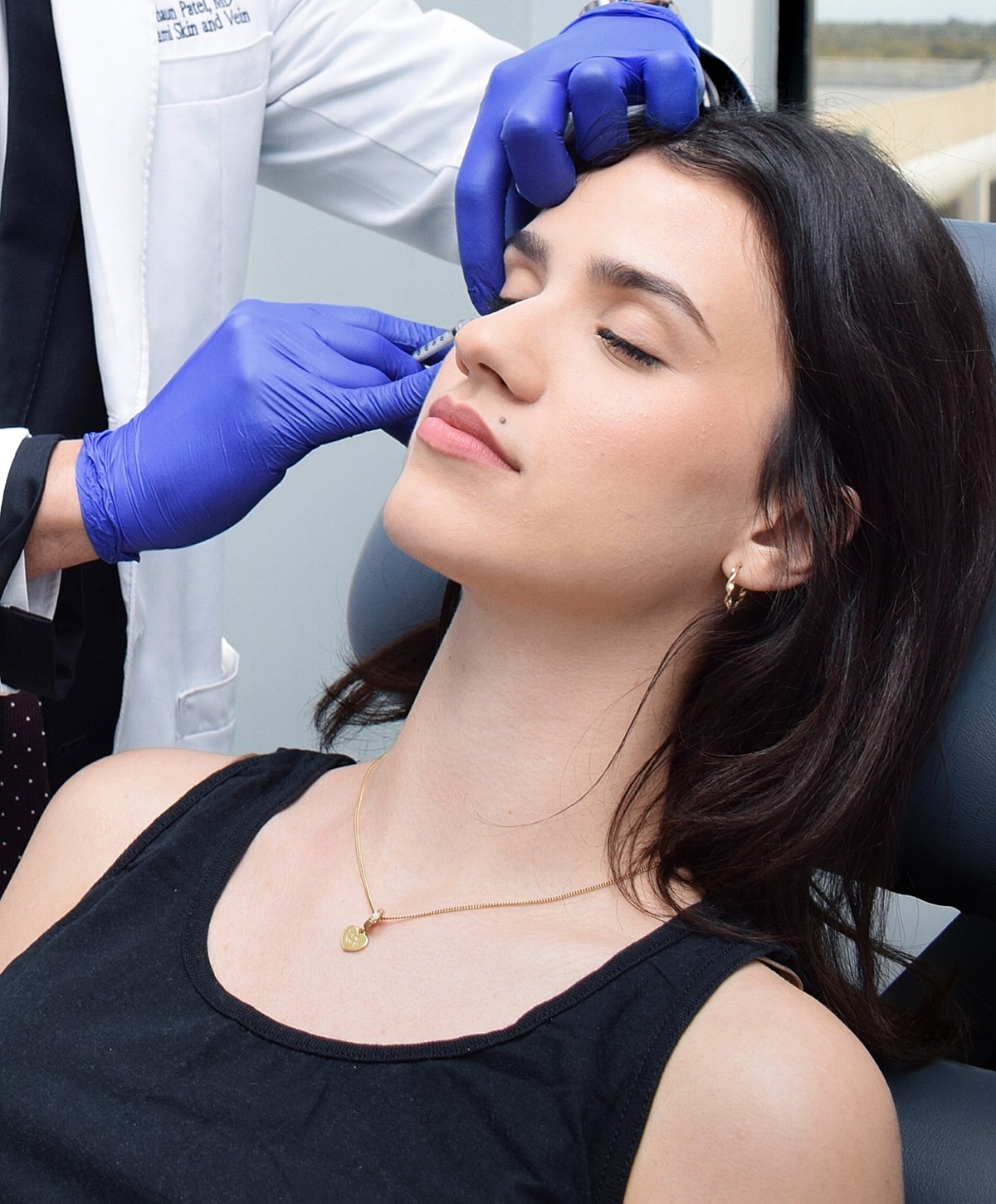
Your aftercare dictates the longevity of your treatment results. Strict lifestyle modifications are required.
Following a peel or laser treatment, your skin will be mildly pink and sensitive. You must avoid all direct UV exposure. Wear a wide-brimmed hat and reapply your broad-spectrum sunscreen every two hours. Excessive exfoliation or harsh scrubbing will trigger inflammation and pull more pigment to the surface. Stick to a gentle cleanser and the specific recovery products we provide.
We can't permanently cure this condition, but we can successfully fade melasma and help you maintain healthy skin.
You won't see total clearance after a single visit. Most patients require multiple sessions spaced several weeks apart to gradually break down the pigment. As the treatments progress and your at-home topical therapies take effect, the dark patches will lighten, and your overall skin tone will become more uniform. Maintaining these results requires lifelong dedication to sun avoidance and medical-grade skincare.

Pricing reflects the complexity of your pigmentation and the specific modalities required to address it. A patient requiring superficial peels will have a different financial investment than a patient undergoing a comprehensive PicoWay and TXA protocol. During your consultation, we provide a transparent breakdown of the costs associated with your specific treatment options and the number of sessions necessary for optimal results.
Treating melasma requires deep anatomical knowledge and an immense amount of restraint. Many high-volume skin centers utilize standard, high-heat laser settings for all pigmentation, inadvertently making melasma worse.
Dr. Shaun Patel understands the delicate science of hyperactive melanocytes. His expertise in pairing low-energy devices with advanced pharmacology ensures that your skin is treated safely. He provides honest, medically sound guidance to protect your complexion from rebound pigmentation.

You don't have to accept a constantly shifting complexion. Dr. Patel and the team at Miami Skin & Vein provide the clinical oversight required to suppress stubborn pigment effectively. Call our Coral Gables office to schedule your consultation and take back your skin's smooth, healthy complexion.
No. Melasma is a chronic condition driven by internal hormones and external light. We can clear the pigment and suppress it effectively, but strict maintenance and sun protection are required to prevent new patches from forming.
Standard sunscreen prevents sunburn, but it is rarely enough for melasma. You need a physical block—specifically a tinted sunscreen containing iron oxide—to protect the skin from the visible light and blue light that trigger pigmentation.
They can, if the wrong device or setting is used. High-heat lasers cause inflammation, which stimulates pigment production. We specifically use low-energy devices like the PicoWay to break up the pigment safely without triggering this heat response.
Medical-grade topicals take time to alter cellular behavior. You should expect to use your prescribed creams consistently for 8 to 12 weeks before noticing a significant visible reduction in the darkness of your patches.
Laser treatments and aggressive chemical peels are contraindicated during pregnancy. But we can guide you toward safe, pregnancy-approved topical ingredients like azelaic acid and vitamin C to help manage the condition until you deliver.

